§ 01Scope and Applicability
These General Terms and Conditions of Sale (the “Terms”) apply exclusively to all quotations, sales, and deliveries of products and related services by AcriPlex I.K.E., Voukourestiou 18, 10671 Athens, Greece, ΓΕΜΗ No. 187020701000, VAT EL802995924 (“AcriPlex”) to business customers (“Buyer”). Terms of Buyer that deviate from, conflict with, or supplement these Terms are expressly rejected and do not apply, even if AcriPlex performs without express objection. Sales are made to businesses only. Sales concluded by AcriPlex’s U.S. affiliate are governed by that entity’s terms of sale.
§ 02Quotations; Orders; Formation
Quotations are valid until the validity date stated in them, otherwise for thirty (30) days from issue, and are subject to prior sale. Technical data, illustrations, and documents accompanying a quotation are approximate and non-binding unless expressly designated as binding. A contract is formed only upon AcriPlex’s written order confirmation or delivery of the goods, whichever occurs first. Obvious errors and omissions in quotations, confirmations, and invoices may be corrected by AcriPlex (E&OE).
§ 03Prices; Taxes
Prices are net, in the currency stated in the quotation, and exclude VAT and any other taxes, customs duties, levies, packaging, shipping, and insurance, all of which are for Buyer’s account unless expressly included. Where Buyer claims a VAT exemption (intra-Community supply or export), Buyer shall provide a valid VAT identification number and/or proof of export; failing this, AcriPlex may invoice the applicable VAT.
§ 04Payment
Unless otherwise agreed in writing, payment is due in advance of production or shipment, in cleared funds and without deduction. In the event of late payment, AcriPlex may charge statutory default interest for commercial transactions (Directive 2011/7/EU as implemented in Greek law) plus reasonable recovery costs, and may suspend performance or require security for outstanding deliveries. Buyer may set off, or withhold payment for, only counterclaims that are undisputed or finally adjudicated.
§ 05Delivery; Lead Times
Unless otherwise agreed, deliveries are made Incoterms® 2020 FCA AcriPlex’s facility, Athens, Greece. Lead times are good-faith estimates and, where advance payment is agreed, run from receipt of the agreed prepayment and of all information and materials required from Buyer. Partial deliveries are permitted to a reasonable extent. Agreed lead times are extended by the duration of any force-majeure event or any delay attributable to Buyer; a delay does not entitle Buyer to damages or termination unless AcriPlex remains in default after a reasonable written grace period.
§ 06Risk; Retention of Title
Risk passes in accordance with the agreed Incoterm. Delivered goods remain the property of AcriPlex until full payment of the purchase price and all ancillary claims arising from the business relationship. Until then, Buyer shall store the goods identifiably as AcriPlex’s property, keep them insured against the usual risks, and neither pledge them nor assign them as security. Resale in the ordinary course of business is permitted; in that case Buyer hereby assigns to AcriPlex, by way of security, its resulting claims against its customers up to the amount owed to AcriPlex.
§ 07Inspection; Notice of Defects
Buyer shall inspect the goods promptly upon delivery. Apparent defects, transit damage, or short deliveries must be notified in writing within eight (8) business days of delivery; hidden defects must be notified promptly upon discovery and within the Warranty Period. Failing timely notice, the goods are deemed accepted with respect to such defects.
§ 08Warranty; Support
AcriPlex provides the limited hardware warranty set out in the AcriPlex Limited Hardware Warranty in effect at the date of the quotation, which is incorporated into these Terms. Every system additionally includes Gold-level support during its first year; optional Silver and Gold support plans are available thereafter, as described on the same page. Except as stated therein, and to the maximum extent permitted by law, no further warranties, express or implied, are given.
§ 09Limitation of Liability
TO THE MAXIMUM EXTENT PERMITTED BY APPLICABLE LAW: (A) ACRIPLEX SHALL NOT BE LIABLE FOR ANY INDIRECT OR CONSEQUENTIAL LOSS, LOSS OF PROFIT, REVENUE, BUSINESS, GOODWILL, DATA, OR USE, OR FOR THE COST OF SUBSTITUTE GOODS OR SERVICES; AND (B) ACRIPLEX’S AGGREGATE LIABILITY ARISING OUT OF OR IN CONNECTION WITH A CONTRACT SHALL NOT EXCEED THE PRICE PAID BY BUYER FOR THE GOODS OR SERVICES GIVING RISE TO THE CLAIM.
These limitations do not apply in cases of willful misconduct or gross negligence, injury to life, body, or health, or any other liability that cannot be excluded or limited under mandatory applicable law, including mandatory product-liability legislation.
§ 10Software; License
Software embedded in or supplied with the products is licensed, not sold. AcriPlex grants Buyer a non-exclusive, non-transferable license — transferable only together with the product — to use such software solely as integrated in, and for the operation of, the product. Buyer shall not copy (except one backup copy), modify, distribute, sublicense, or reverse engineer the software, except to the extent such a restriction is prohibited by mandatory law. Open-source components are governed by their respective licenses, which prevail for those components. Licenses terminate upon Buyer’s material breach.
§ 11Intellectual Property
All intellectual-property rights in the products, software, documentation, designs, and know-how remain with AcriPlex or its licensors. No rights are granted beyond those expressly stated in these Terms. Buyer shall not remove or alter product markings, serial numbers, or proprietary notices.
§ 12Export Control; Sanctions
The products, software, and technology may be subject to export-control and sanctions laws, including Regulation (EU) 2021/821 and the U.S. Export Administration Regulations. Buyer shall not, directly or indirectly, sell, export, re-export, transfer, or make available the products to destinations, entities, or persons, or for end-uses, prohibited by such laws without the required authorizations, and shall provide end-use and end-user information upon request. AcriPlex’s obligations are conditional upon the grant of any required licenses; refusal or delay by the competent authorities does not constitute a default by AcriPlex.
§ 13Regulatory Approvals; Spectrum Use
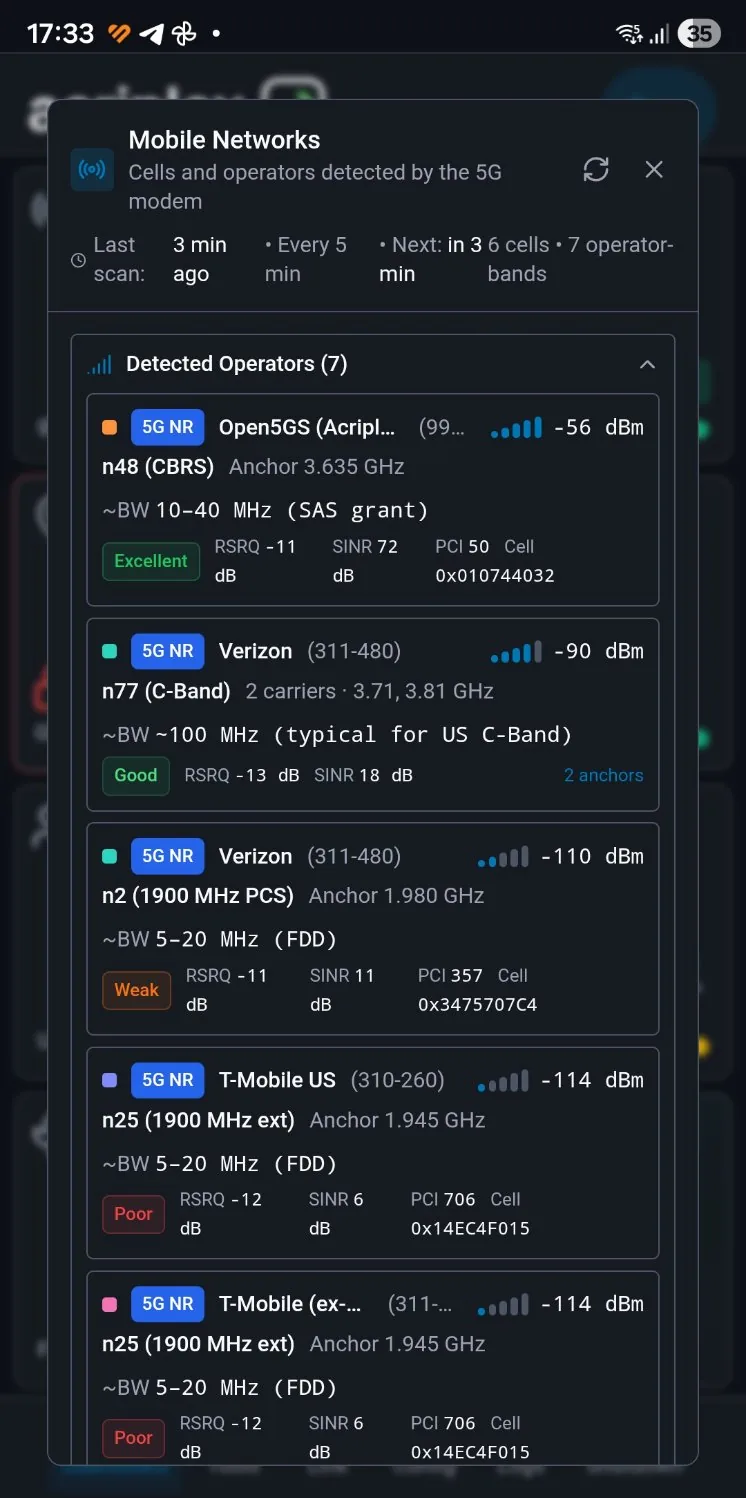
Radio products operate in frequency bands whose use is subject to national authorization. Buyer is solely responsible for obtaining and maintaining all licenses, registrations, and authorizations required for installation and operation in the country of use — including, for example, CBRS SAS registration in the United States or national local-5G licensing in EU member states — and for operating the products in accordance with applicable law and the granted parameters. AcriPlex makes no representation that operation is permitted in any particular jurisdiction. Certification information for the products is available on request.
§ 14Changes; Cancellation; Returns
Products are configured or built to order. After order confirmation, cancellations or changes require AcriPlex’s written consent and reimbursement of the costs incurred; AcriPlex may charge a reasonable cancellation or restocking fee of up to 20% of the order value. Returns of non-defective goods are accepted only by prior written agreement.
§ 15Force Majeure
Neither party is liable for failure or delay caused by events beyond its reasonable control, including natural events, epidemics, war, terrorism, cyber-attacks, labor disputes, acts of authorities, refusal or delay of export licenses, energy or transport disruptions, and supplier failures caused by such events. If the event persists for more than ninety (90) days, either party may terminate the affected order without liability, against reimbursement of AcriPlex’s costs for work already performed.
§ 16Confidentiality
Quotations, prices, and technical information disclosed by AcriPlex are confidential, may be used by Buyer solely for evaluating and executing the transaction, and may not be disclosed to third parties without AcriPlex’s prior written consent.
§ 17Governing Law; Jurisdiction
These Terms and all contracts concluded under them are governed by the laws of Greece, excluding its conflict-of-law rules and excluding the United Nations Convention on Contracts for the International Sale of Goods (CISG). The exclusive place of jurisdiction is Athens, Greece; AcriPlex may, however, also bring proceedings against Buyer at Buyer’s seat.
§ 18Miscellaneous
Buyer may not assign a contract or claims under it without AcriPlex’s written consent. If any provision is or becomes invalid, the remaining provisions stay in effect, and the invalid provision shall be replaced by a valid one that comes closest to its commercial intent. Amendments and side agreements must be made in writing. The English version of these Terms prevails over any translation. These Terms, the quotation, and AcriPlex’s order confirmation constitute the entire agreement for the relevant order.
§ 01Warranty
AcriPlex I.K.E. (“AcriPlex”) warrants to the original purchaser (“Buyer”) that AcriPlex-branded hardware products (the “Products”) will be free from defects in materials and workmanship under normal use in accordance with the applicable documentation for a period of twelve (12) months from the date of delivery (the “Warranty Period”). Cables and accessories are warranted for ninety (90) days from delivery. This Warranty is granted to business customers only and is transferable only together with the Product.
§ 02Included Support — Year One
Every AcriPlex system includes Gold-level support for the first twelve months at no additional charge, as described in § 08 below — including the advance-replacement loaner service and the live support line. Optional Silver and Gold plans are available from the second year onward.
§ 03Embedded Software
Software embedded in or delivered with the Products is licensed, not sold. AcriPlex warrants that such software will substantially conform to the applicable documentation for ninety (90) days from delivery. Maintenance updates and security patches are provided through an active support plan — included at Gold level during the first year, and thereafter under an active Silver or Gold plan. AcriPlex does not warrant that software operation will be uninterrupted or error-free.
§ 04Dead on Arrival
If a Product fails on first use within thirty (30) days of delivery and AcriPlex confirms the failure, AcriPlex will prioritize repair or replacement at its own cost, including shipping in both directions. In addition, under the Gold-level support included in year one, an advance-replacement loaner is dispatched within two (2) business days as described in § 08.
§ 05Exclusive Remedy
AcriPlex’s sole obligation, and Buyer’s exclusive remedy, under this Warranty is, at AcriPlex’s option, repair, replacement (with new or refurbished parts of equal or better performance), or refund of the purchase price against return of the Product. Repaired or replaced Products are warranted for the remainder of the original Warranty Period or ninety (90) days from return shipment, whichever is longer.
§ 06RMA Procedure & Service Locations
Warranty service requires a Return Material Authorization (“RMA”) number issued by AcriPlex before return; contact info@acriplex.net. Systems delivered in the United States are serviced at AcriPlex’s New York laboratory; systems delivered in the European Union are serviced in Athens, Greece — so RMA shipments for US and EU customers involve no customs formalities (domestic or intra-EU transport).
Except in confirmed Dead-on-Arrival cases (§ 04), shipping to and from the servicing laboratory is arranged and paid by the customer, in the original or equivalent protective packaging, at the customer’s risk. For customers outside the EU and US, AcriPlex advises on the appropriate customs procedure for repair shipments (such as inward/outward processing relief). Products received without an RMA number may be refused. If no defect is found, AcriPlex may charge a reasonable inspection and handling fee plus return shipping.
§ 07Exclusions
This Warranty does not cover:
- normal wear and cosmetic damage;
- damage or malfunction caused by accident, abuse, misuse, liquid or foreign-matter ingress beyond the Product’s rated protection, improper installation, operation outside the published environmental or electrical specifications, or unsuitable power sources;
- modifications or repairs not authorized by AcriPlex in writing, or Products whose serial number has been altered or removed;
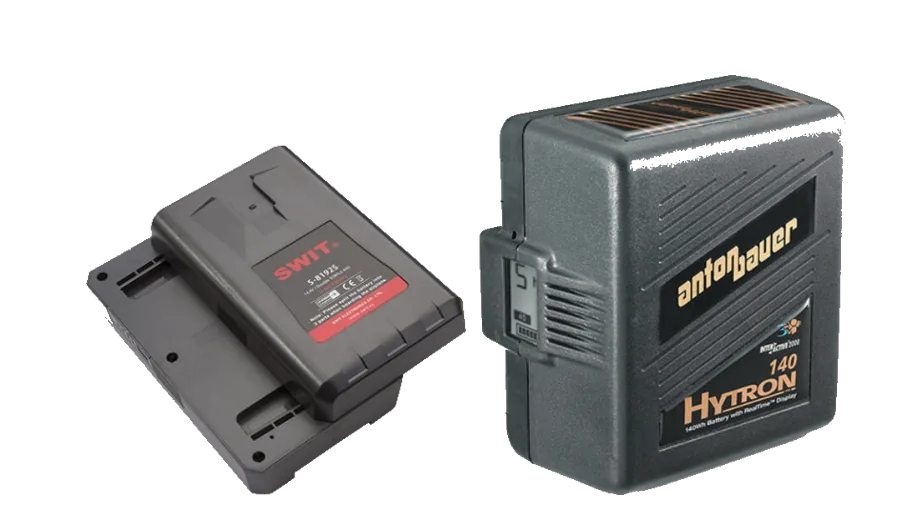
- customer-supplied items, including batteries;
- consumables;
- third-party hardware and software not manufactured by AcriPlex — including satellite terminals and third-party radio units — which carry their manufacturers’ warranties only;
- damage caused by force majeure events;
- use in violation of applicable law, including operation without required spectrum authorization.
§ 08Support & Maintenance Plans
From the second year, two annually renewable plans are offered, priced on the net hardware price of the covered system as invoiced. Enrollment is possible at any time for a twelve-month term; renewal must be requested at least five (5) working days before the plan anniversary. Enrollment or re-enrollment after a coverage lapse is subject to a billable unit inspection.
| Service | Silver — 10%/yr | Gold — 15%/yr |
|---|
| Software updates & security patches | ✓ | ✓ |
| Support ticketing, response within one business day | ✓ | ✓ |
| RMA repair at your servicing laboratory — parts & labor for covered failures | ✓ | ✓ |
| Advance-replacement loaner, dispatched within two business days | — | ✓ |
| Customs assistance for RMA logistics (customers outside the EU/US) | — | ✓ |
| Live WhatsApp support line, 08:00–24:00 EET, seven days a week | — | ✓ |
Loaner terms (Gold). The loaner is dispatched from the customer’s servicing laboratory in an equivalent or better functional configuration and must be returned within six (6) working days of receiving the repaired system. For customers outside the EU and US, the loaner is supplied under an ATA Carnet, with AcriPlex preparing the paperwork. The customer is responsible for the loaner’s care; loss or damage is billable.
Excluded-event failures (§ 07 — e.g., misuse, out-of-specification operation, unauthorized modification) under any plan: diagnostics and labor are covered; parts and shipping are invoiced after inspection of the returned unit.
Shipping to and from the servicing laboratory is arranged and paid by the customer under both plans. Plan contents and rates may be updated for future terms; the terms in effect at enrollment or renewal apply.
§ 09Disclaimer
TO THE MAXIMUM EXTENT PERMITTED BY APPLICABLE LAW, THIS WARRANTY IS EXCLUSIVE AND IN LIEU OF ALL OTHER WARRANTIES, EXPRESS OR IMPLIED, INCLUDING ANY IMPLIED WARRANTIES OF MERCHANTABILITY, FITNESS FOR A PARTICULAR PURPOSE, AND NON-INFRINGEMENT; ANY IMPLIED WARRANTIES THAT CANNOT BE DISCLAIMED ARE LIMITED IN DURATION TO THE WARRANTY PERIOD.
Nothing in this Warranty excludes or limits any liability that cannot be excluded or limited under mandatory applicable law.
§ 10How to Obtain Service
Contact info@acriplex.net with the Product serial number, proof of purchase, and a description of the fault. AcriPlex may offer remote diagnosis before issuing an RMA; where the encrypted remote-assistance overlay is activated on the system, diagnosis can be performed with the customer’s consent.
§ 01Acceptance and Scope
This website, acriplex.net (the “Site”), is operated by AcriPlex I.K.E., Voukourestiou 18, 10671 Athens, Greece, ΓΕΜΗ No. 187020701000, VAT EL802995924 (“AcriPlex”, “we”). By accessing or using the Site you agree to these Terms of Use. If you do not agree, please do not use the Site. These Terms govern use of the Site only; the purchase of AcriPlex products and services is governed by the General Terms and Conditions of Sale and, where applicable, the Limited Hardware Warranty & Support Plans.
§ 02Informational Content; No Offer
All content on the Site — including product descriptions, technical specifications, availability information, and any prices or price lists — is provided for general information and constitutes an invitation to treat, not a binding offer. Specifications and prices are subject to change without notice, and errors and omissions are excepted (E&OE). Orders are concluded exclusively on the basis of an issued AcriPlex quotation and order confirmation, which prevail over any information published on the Site.
§ 03Products; Regulatory Information
AcriPlex products include radio equipment that operates in frequency bands whose use is subject to national authorization. Availability and lawful operation vary by country. Nothing on the Site constitutes a representation that any product may be operated in any particular jurisdiction; the operator is responsible for obtaining the required spectrum authorizations and licenses, as further described in the General Terms and Conditions of Sale.
§ 04Intellectual Property
The Site and its content — including text, images, graphics, documents, product designations such as AcriPlex, SBBD, SBBP and SBBPr, and the AcriPlex logo — are protected by intellectual-property rights and belong to AcriPlex or its licensors. All rights are reserved. No license or other right is granted by implication or otherwise, except as expressly stated in § 05.
§ 05Permitted Use of Materials
You may view the Site and download or print pages and documents made available for download (such as product and procurement guides) solely for your internal business evaluation and procurement purposes, provided you keep all proprietary notices intact. You may not modify, republish, translate, or commercially redistribute Site content without AcriPlex’s prior written consent.
§ 06Prohibited Use
When using the Site, you must not:
- use it for any unlawful purpose or in violation of these Terms;
- attempt to gain unauthorized access to the Site, its servers, or connected systems, or test their security without our written consent;
- introduce malware or other harmful code, or interfere with the Site’s operation;
- scrape, harvest, or bulk-extract content or data by automated means (ordinary search-engine indexing excepted);
- misrepresent your identity or affiliation, or suggest an endorsement by AcriPlex that does not exist.
§ 07Third-Party Content and Links
The Site may reference third-party products and services (for example, satellite terminals or radio units used with AcriPlex systems) and may link to third-party websites. Such references and links are provided for convenience only and do not imply endorsement or responsibility; third-party sites are governed by their own terms. Third-party names and trademarks belong to their respective owners.
§ 08Privacy and Data Protection
AcriPlex I.K.E. is the controller of personal data submitted through the Site’s contact channels (such as email inquiries). We use such data to respond to your inquiry and to conduct the resulting business relationship, in accordance with Regulation (EU) 2016/679 (GDPR). We do not sell personal data. You may exercise your rights of access, rectification, erasure, restriction, objection, and portability by contacting info@acriplex.net; you may also lodge a complaint with the Hellenic Data Protection Authority. Where a separate privacy notice is published on the Site, it prevails on privacy matters.
§ 09Disclaimer
THE SITE AND ITS CONTENT ARE PROVIDED “AS IS” AND “AS AVAILABLE”. TO THE MAXIMUM EXTENT PERMITTED BY APPLICABLE LAW, ACRIPLEX MAKES NO WARRANTY AS TO THE ACCURACY, COMPLETENESS, TIMELINESS, OR AVAILABILITY OF THE SITE OR ITS CONTENT, OR THAT THE SITE WILL BE UNINTERRUPTED OR ERROR-FREE.
§ 10Limitation of Liability
To the maximum extent permitted by applicable law, AcriPlex shall not be liable for any indirect or consequential loss, or loss of profit, revenue, business, goodwill, data, or use, arising out of the use of, or inability to use, the Site or its content. This limitation does not apply in cases of willful misconduct or gross negligence, injury to life, body, or health, or any other liability that cannot be excluded or limited under mandatory applicable law.
§ 11Changes
We may modify the Site and these Terms of Use at any time. The version and effective date are stated above; changes apply from publication on the Site, and continued use of the Site after publication constitutes acceptance of the updated Terms.
§ 12Governing Law; Jurisdiction
These Terms of Use are governed by the laws of Greece, excluding their conflict-of-law rules. The courts of Athens, Greece have jurisdiction over disputes arising from the use of the Site, without prejudice to mandatory provisions of applicable law.
§ 13Miscellaneous; Contact
If any provision of these Terms is or becomes invalid, the remaining provisions stay in effect. Questions about the Site or these Terms: info@acriplex.net.
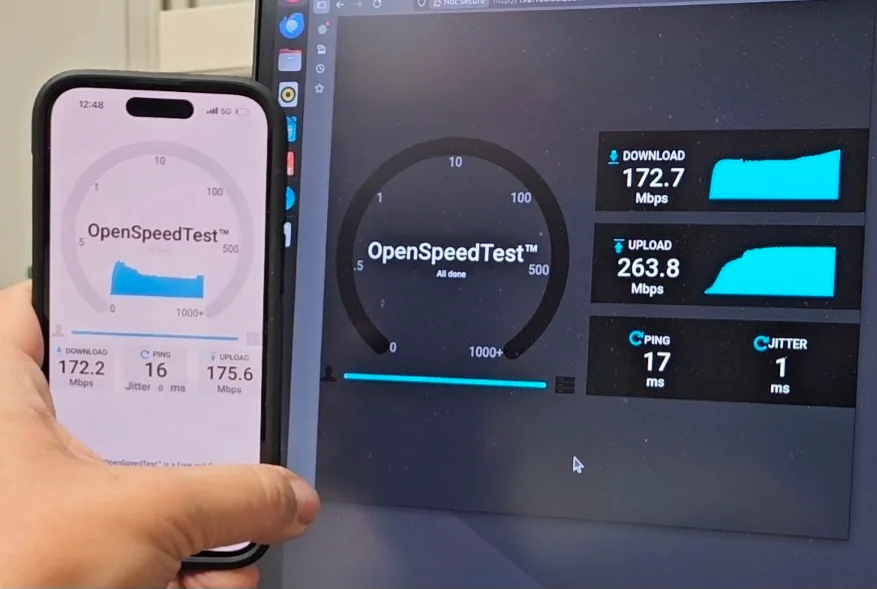 Two UEs at once
 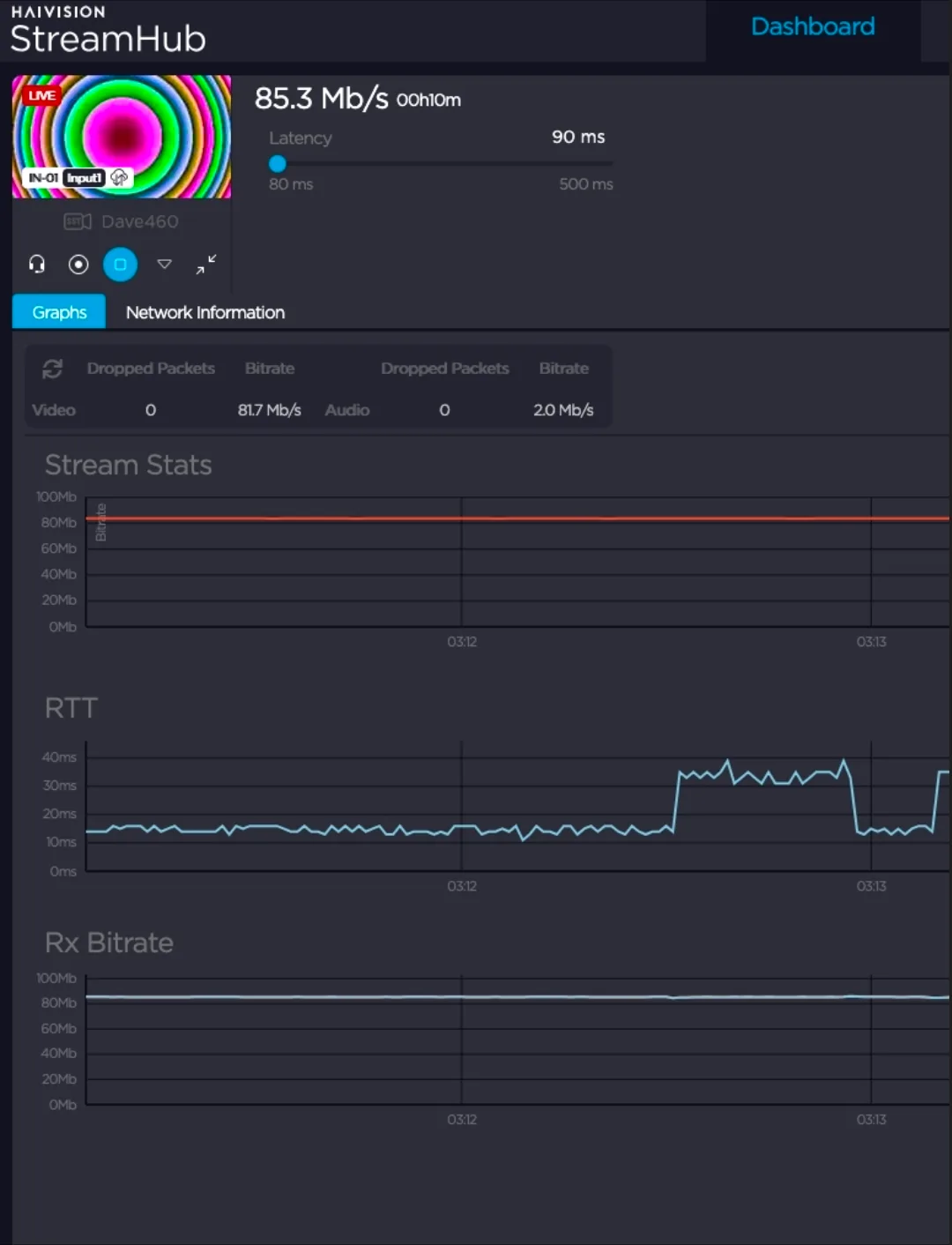 Haivision StreamHub